If you want a Chicago neighborhood that feels creative, connected, and lived-in, West Town deserves a close look. You may be searching for a home that gives you walkability, strong dining options, and architectural character without the feel of a high-rise district. This guide will help you understand why West Town stands out for art, food, and loft-style living, and what that can mean if you plan to buy or sell here. Let’s dive in.
Why West Town Feels Different
West Town sits just northwest of downtown, but it does not read like a lakefront luxury enclave. Local tourism and planning sources describe it as eclectic, artsy, and shaped by waves of immigration, which helps explain its layered identity and neighborhood-scale energy.
That mix shows up in daily life. You have cultural institutions, independent businesses, mixed-use streets, and a housing stock that feels more organic than master-planned. For many buyers, that is exactly the appeal.
West Town is also notably well connected. The area is served by CTA Blue, Green, and Pink Line access, Metra’s MD-W line, multiple bus routes, and bike corridors along Milwaukee, Halsted, Grand, and Damen.
West Town’s Arts Scene
West Town’s creative reputation is backed by real programming, not just branding. The West Town Chamber runs First Fridays each month, with galleries and arts-based businesses staying open until 8 PM as part of the neighborhood’s gallery district and public art efforts.
That kind of recurring event matters because it gives the neighborhood a steady cultural rhythm. Instead of art feeling separate from daily life, it becomes part of how residents experience the area after work or on a casual evening out.
Galleries and cultural spaces
West Town’s arts ecosystem includes a mix of exhibition spaces and museums. Circle Contemporary by Arts of Life offers a multipurpose exhibition space on West Carroll Avenue, while Intuit: The Center for Intuitive and Outsider Art adds a distinct institutional presence to the neighborhood.
The area also includes the Ukrainian National Museum, the Ukrainian Institute of Modern Art, the Polish Museum of America, and the National Museum of Puerto Rican Arts & Culture. Together, these spaces reinforce West Town’s identity as a culturally layered part of Chicago rather than a single-note destination.
Art that feels accessible
One of West Town’s strengths is that the arts scene often feels approachable. Choose Chicago also points to Ignite Glass Studios, where a public gallery and live demonstrations make the experience more hands-on and visible.
For buyers, that matters more than it may seem. A neighborhood with active cultural life often feels richer on an everyday basis, especially if you value being able to step outside and find something interesting without planning your entire day around it.
Dining in West Town
If art gives West Town its texture, dining gives it daily momentum. Chicago Avenue is one of the clearest food corridors, with a range that includes destination dining, long-running neighborhood spots, and places that work just as well for a casual weeknight.
Local neighborhood guides highlight restaurants such as Forbidden Root, Heritage Restaurant, Soulé, Kasama, Porto, Oggi Trattoria, and Kasia’s Deli. That lineup helps show the breadth of the area’s food scene, from bakery culture and comfort food to more refined dining experiences.
Chicago Avenue’s strong mix
What makes West Town compelling is not just quality, but contrast. The neighborhood has been described through combinations like botanical brewery, caviar bar, Creole restaurant, and Filipino bakery on the same street.
That variety gives the area a very specific kind of urban appeal. You are not limited to one dining identity, and that helps the neighborhood feel flexible whether your routine leans casual, social, or occasion-driven.
Coffee and daytime energy
West Town also performs well during the day, which is important if you work remotely or simply want more from a neighborhood than dinner reservations. CMAP reports that 31.0% of workers in West Town work from home, and the local coffee and bakery scene fits that pattern.
Options in the area include Hoosier Mama Pie Company for pie and coffee, daytime bakery service at Kasama, West Town Bakery on Chicago Avenue, Move Along Coffee on Grand Avenue, and Nettare, which starts the day with coffee, tea, and pastries before shifting into lunch, cocktails, and dinner.
This daytime rhythm adds to West Town’s appeal for buyers who want a neighborhood they can use throughout the day. It supports the feeling that you are living in a real residential district with strong local habits, not just visiting an entertainment zone.
Why Loft Living Fits West Town
West Town is not one uniform loft district, but the housing data helps explain why loft-style living makes sense here. CMAP reports that 42.2% of homes were built before 1940, and the area includes a large share of smaller multi-unit buildings, including 32.0% in 3-to-4 unit buildings and 23.1% in 5-to-9 unit buildings.
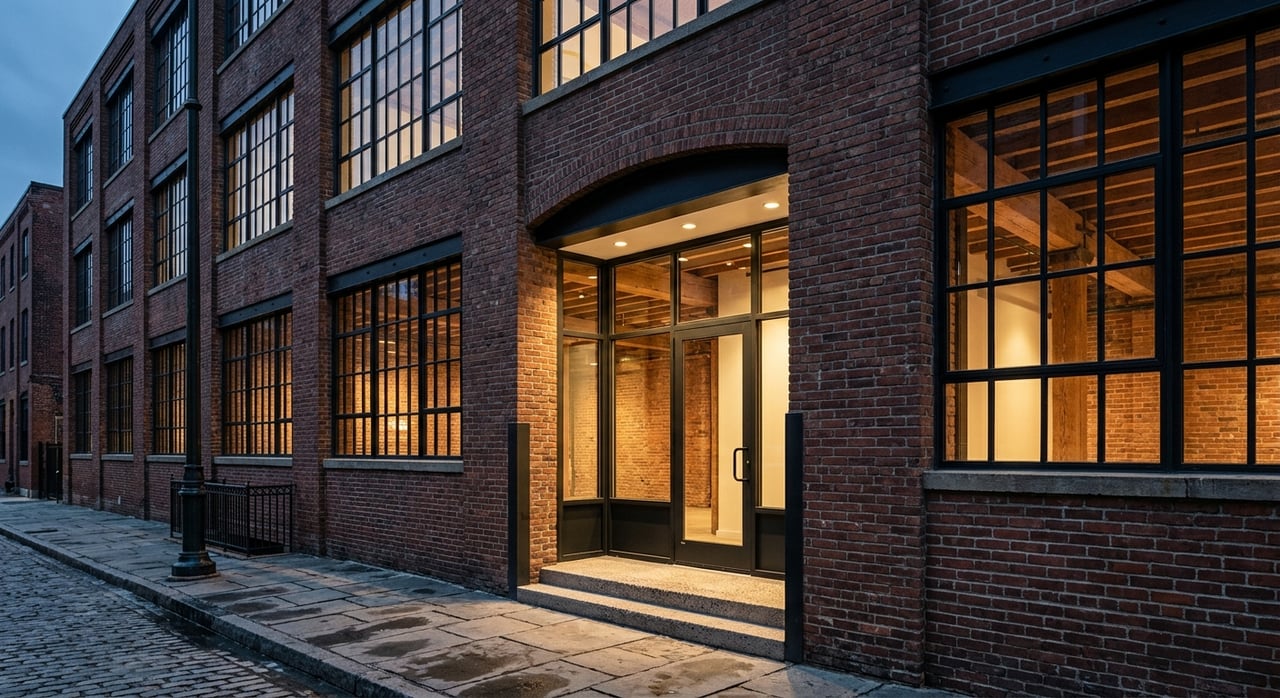
That is a different profile from neighborhoods dominated by towers. It points instead to a built environment of vintage flats, small condo buildings, and adaptive-use pockets that can offer the high ceilings, exposed materials, and unique layouts many buyers associate with loft living.
Character over uniformity
West Town’s land use is also mixed, with CMAP reporting 23.6% multi-family residential, 6.5% industrial, 5.2% commercial, and 4.9% mixed use. In practical terms, that can create a streetscape with more visual variety and more building-to-building personality.
For buyers, this often means the home search is less about picking from similar units in a vertical stack and more about finding the right fit. You may come across boutique condo buildings, converted spaces, or smaller-scale properties with a stronger sense of individuality.
A strong fit for urban buyers
The neighborhood’s household profile also helps explain demand. CMAP reports that 34.4% of households are one-person households and 42.6% are two-person households, while 58.7% of housing is renter occupied.
That does not define every buyer, of course, but it does suggest why West Town often appeals to urban professionals, early-stage buyers, and downsizers who want proximity to downtown without giving up neighborhood character. If your priority is a home that supports city living with texture and convenience, West Town is well positioned.
West Town and Everyday Mobility
Transportation is one of West Town’s practical strengths. According to CMAP, 20.6% of workers commute by transit, 8.3% walk or bike, and 20.2% of households have no vehicle.
Those numbers support what many residents already experience on the ground. West Town works well for people who want options, whether that means rail access, bus service, biking corridors, or simply a neighborhood pattern that makes car-light living realistic.
That flexibility can be especially attractive if you split time between office days, remote work, and frequent trips into other parts of Chicago. It also supports resale value because connectivity tends to remain a meaningful factor for both buyers and renters.
How West Town Compares
West Town often attracts buyers who are comparing several Chicago neighborhoods at once. Understanding its relative position can help you decide whether its lifestyle is the right match.
West Town vs. Gold Coast and Lincoln Park
Compared with Gold Coast, West Town feels less formal and less centered on traditional luxury retail and lakefront prestige. Compared with Lincoln Park, it feels less tied to large green spaces and more defined by mixed-use streets, independent food businesses, and a neighborhood-scaled arts scene.
That difference is not about better or worse. It is about fit. If you want a more layered, creative, and less canonical version of city living, West Town often lands differently.
West Town vs. River North
West Town also differs from River North. While both areas have connections to gallery culture and adaptive-reuse buildings, River North is more closely associated with a sleek high-rise environment and a heavier nightlife concentration.
West Town tends to feel more residential in its day-to-day rhythm. Its cultural life is active, but it is often woven into local routines through gallery nights, public art, neighborhood coffee spots, and smaller-scale dining streets.
What Buyers and Sellers Should Notice
For buyers, West Town offers a compelling blend of architecture, accessibility, and neighborhood identity. The housing stock is varied, the transit network is strong, and the lifestyle story feels distinct within Chicago.
For sellers, that same distinction matters in marketing. A West Town property often benefits from being positioned not just by bedroom count or finishes, but by how it connects to the neighborhood’s real strengths: cultural energy, food scene, daily walkability, and a more intimate urban form.
That kind of storytelling is especially important in a neighborhood where buyers may be choosing between boutique buildings, vintage spaces, and loft-style homes with very different personalities. In West Town, presentation and local context can make a meaningful difference.
If you are thinking about buying or selling in West Town, it helps to work with someone who understands how this neighborhood fits into Chicago’s broader near-north market. For tailored guidance and a polished, neighborhood-savvy approach, connect with Anton Ursini.
FAQs
What is West Town known for in Chicago?
- West Town is known for its arts-forward identity, mixed-use streets, cultural institutions, and a dining scene centered in part around Chicago Avenue.
What kind of homes are common in West Town?
- West Town includes many older homes and smaller multi-unit buildings, with CMAP reporting strong shares of pre-1940 housing, 3-to-4 unit buildings, and 5-to-9 unit buildings.
Why does loft living make sense in West Town?
- West Town’s older building stock, mixed land use, and adaptive-use character support the kind of architectural variety that often appeals to loft and boutique-condo buyers.
Is West Town convenient for commuting in Chicago?
- Yes. West Town has access to CTA Blue, Green, and Pink Line service, Metra MD-W service, multiple bus routes, and several bike corridors.
Who tends to be a good fit for West Town living?
- West Town can appeal to buyers who want walkability, dining, cultural access, and a more neighborhood-scaled urban setting close to downtown.
How is West Town different from River North or Gold Coast?
- West Town generally feels more residential, artsy, and layered, while River North is more high-rise and nightlife oriented, and Gold Coast is more closely tied to traditional luxury and lakefront prestige.